

GF POWERPC INTELLIGENT PLATFORM
The chip supply shortage has pushed the issue of production cuts by domestic automobile companies into the spotlight.
Release Time:
2022-08-23
Author:
Source:
Summary
The existing production capacity deployment is a quick and feasible approach, but it is not easy for production lines to change product types. Power equipment is generally considered to have low gross profit. Once demand stabilizes and prices drop, wafer lines change product types, so wafer lines do not have significant capacity to transfer existing capacity to power equipment. Currently, the shortage of power equipment is expected to continue until the end of 2023, as demand for power equipment will reach a relatively stable level with the expansion of new production lines and the reduction in demand for new energy vehicles.
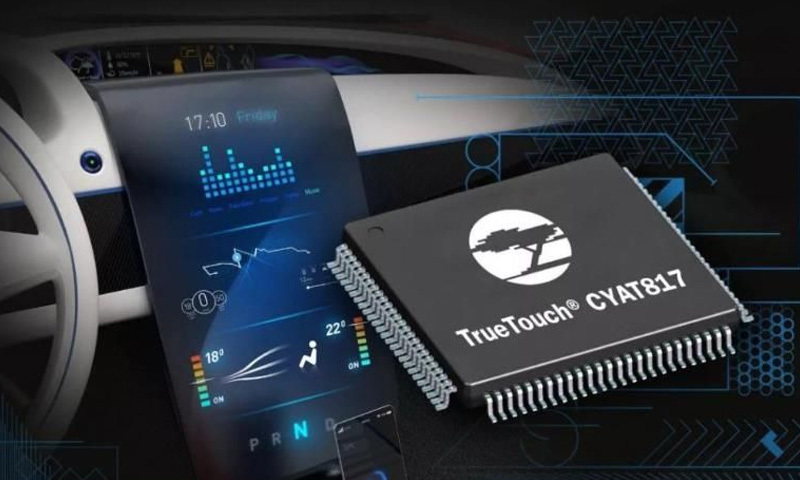
Due to the lack of core components, the issue of production cuts by domestic automobile companies has once again come under intense scrutiny. According to data from the China Association of Automobile Manufacturers, in the first half of this year (January to June), domestic automobile production and sales reached 12.117 million and 12.057 million units respectively, down 3.7% and 6.6% year-on-year. It is undeniable that the shortage of AQV252 chips has to some extent affected the release of consumer demand, especially as the level of intelligence in automobiles continues to increase, chips can be said to be the "lifeblood" of major automobile companies. In a weak consumption environment, this can be seen as another blow to economic development.
The global chip shortage caught everyone off guard, with automotive chips being the most affected, causing major automakers to fall into the predicament of "production halted waiting for chips." Under these circumstances, they announced production cuts. Recently, a sharp decline in demand for consumer electronics chips has led to production cuts and order reductions. Major chip manufacturers have also shifted production capacity to the more popular automotive chips, and more manufacturers have joined the production of automotive chips, leading to news that "automotive chips are no longer in shortage." However, according to reporters, only some automotive chips have been alleviated, and the entire automotive chip market is shifting to a structural shortage. Among them, the most critical, even called the "bottleneck" of automotive production, is the IGBT power chip.
With the deepening application of automotive electronics, the proportion of automotive electronics in the total vehicle cost is increasing. Currently, the automotive electronics costs for domestic compact models, mid-to-high-end models, hybrid models, and pure electric models are 15%, 28%, 47%, and 65% respectively. With the gradual penetration of high-end configurations, the automotive industry is expected to further develop "electronification." Consumers' demand for automotive safety, comfort, and entertainment is increasing, and cars are accelerating their intelligence. Since automotive electronic components such as sensors, cameras, and radars need to be widely used in the intelligentization process, the automotive electronics industry is expected to expand and upgrade along with this process. Driven by downstream demand, the automotive electronics industry is developing well, with a recent growth trend exceeding 10% CAGR, and the market size is expected to reach 978.3 billion yuan in 2022.
The existing production capacity deployment is a quick and feasible approach, but it is not easy for production lines to change product types. Power equipment is generally considered to have low gross profit. Once demand stabilizes and prices drop, wafer lines change product types, so wafer lines do not have significant capacity to transfer existing capacity to power equipment. However, the production lines for consumer electronics power devices can alleviate the shortage of automotive power devices through automotive regulation certification and improvements in chip technology. Currently, the shortage of power equipment is expected to continue until the end of 2023, as demand for power equipment will reach a relatively stable level with the expansion of new production lines and the reduction in demand for new energy vehicles. In addition, with the maturity and successful deployment of silicon carbide power semiconductor technology, the shortage of power semiconductors will also be alleviated to some extent. Due to the impact of the pandemic and the international cooperation environment, the shortage of automotive power devices will continue for some time, estimated to last from half a year to a year, mainly affected by the dual factors of production expansion and deployment. Silicon carbide has strong substitutability for silicon-based power devices, but currently the price is still high, the process is unstable, and supply is small, far below demand. Therefore, silicon carbide only provides very limited relief for the shortage of power devices.
With the increase of automotive electronic devices, the responsibility of automotive chips extends to various components inside and outside the vehicle, from the powertrain, air conditioning system, windows, headlights to the dashboard, wipers, electric trunk, etc., all of which require chips for coordination. Although the demand is large, automobile companies have not given enough attention to chips because early automotive chips only handled some basic functions and could not control the core competitiveness of a vehicle model. However, in recent years, the wave of the "new four modernizations" in the automotive industry has swept through, and the demand for chips in the automotive industry has begun to show exponential growth, especially for autonomous driving chips and smart car chips. In addition, the demand for chips in new energy vehicles is far higher than that in fuel vehicles. On one hand, "electrification" is usually accompanied by "intelligence." On the other hand, the three-electric system itself also requires more chips. In recent years, the explosive sales of new energy vehicles have undoubtedly further intensified the global chip supply shortage.
Keywords:
Related Information
发布时间:2020-08-25
发布时间:2020-08-25
发布时间:2020-08-25


Mobile Website
Or search "GF PowerPC Intelligent Platform Beijing Co., Ltd."
There'll be more.
Mobile:+86-13601241468
Phone:+86-10-83290898
Email:nfx@gf-powerpc.com
Address: Room 205, Building 1, Enji Xiyuan, Liangjiadian, Fuwai, Haidian District, Beijing